01 / Origin
Why RobinX started
Most of the products we looked at were stronger at one side of personal finance than the other: managing transactions and budgets day to day, or modelling decisions years into the future. The planning tools also tended to start from a separate set of balances and assumptions.
RobinX started from wanting those two views to use the same financial record. The accounts, transactions, debts, investments, and goals that explain where things stand today should also be useful when comparing a move, a different job, a home purchase, or an earlier retirement date.
02 / Product
Accounts, transactions, and monthly planning
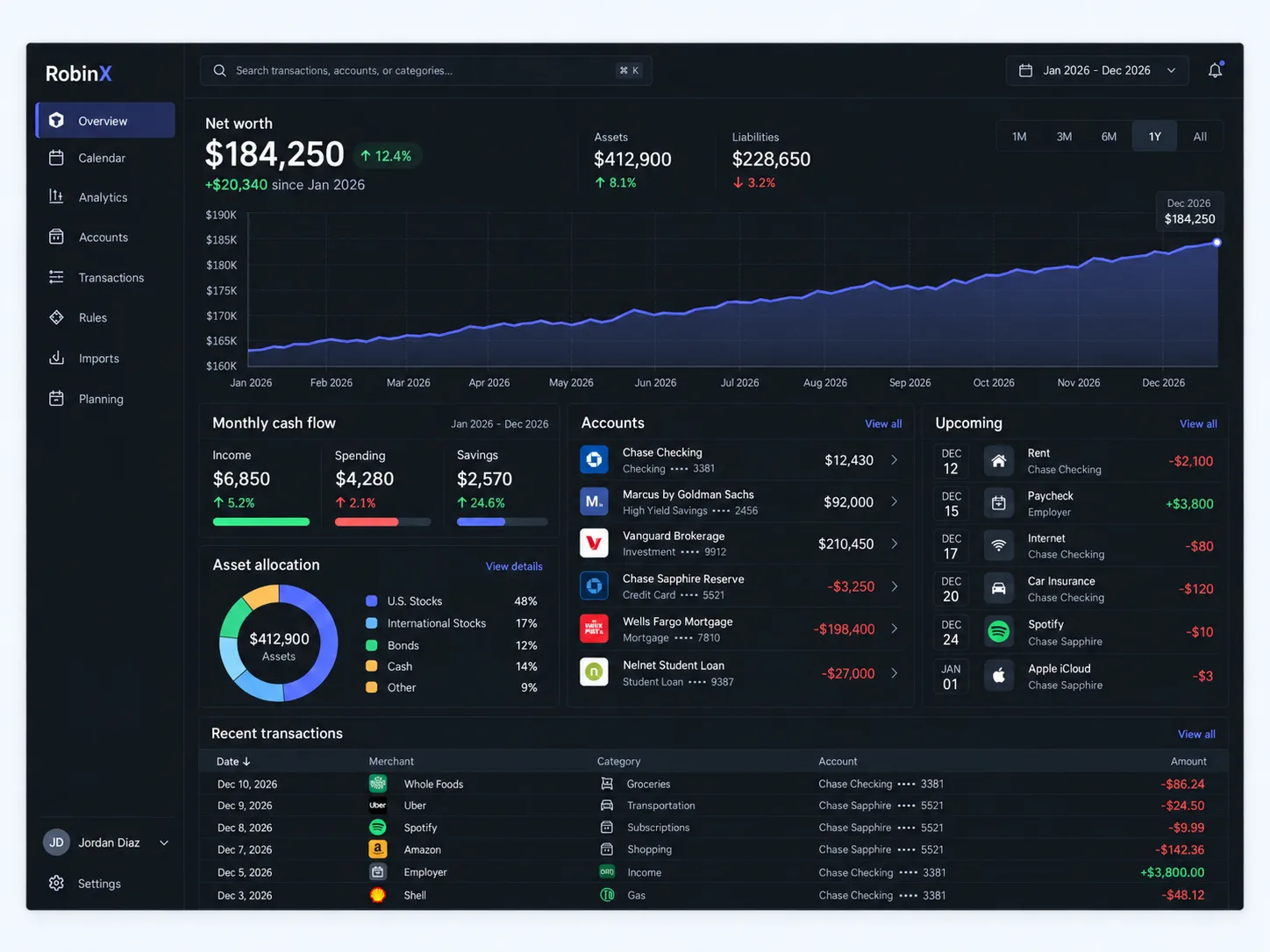
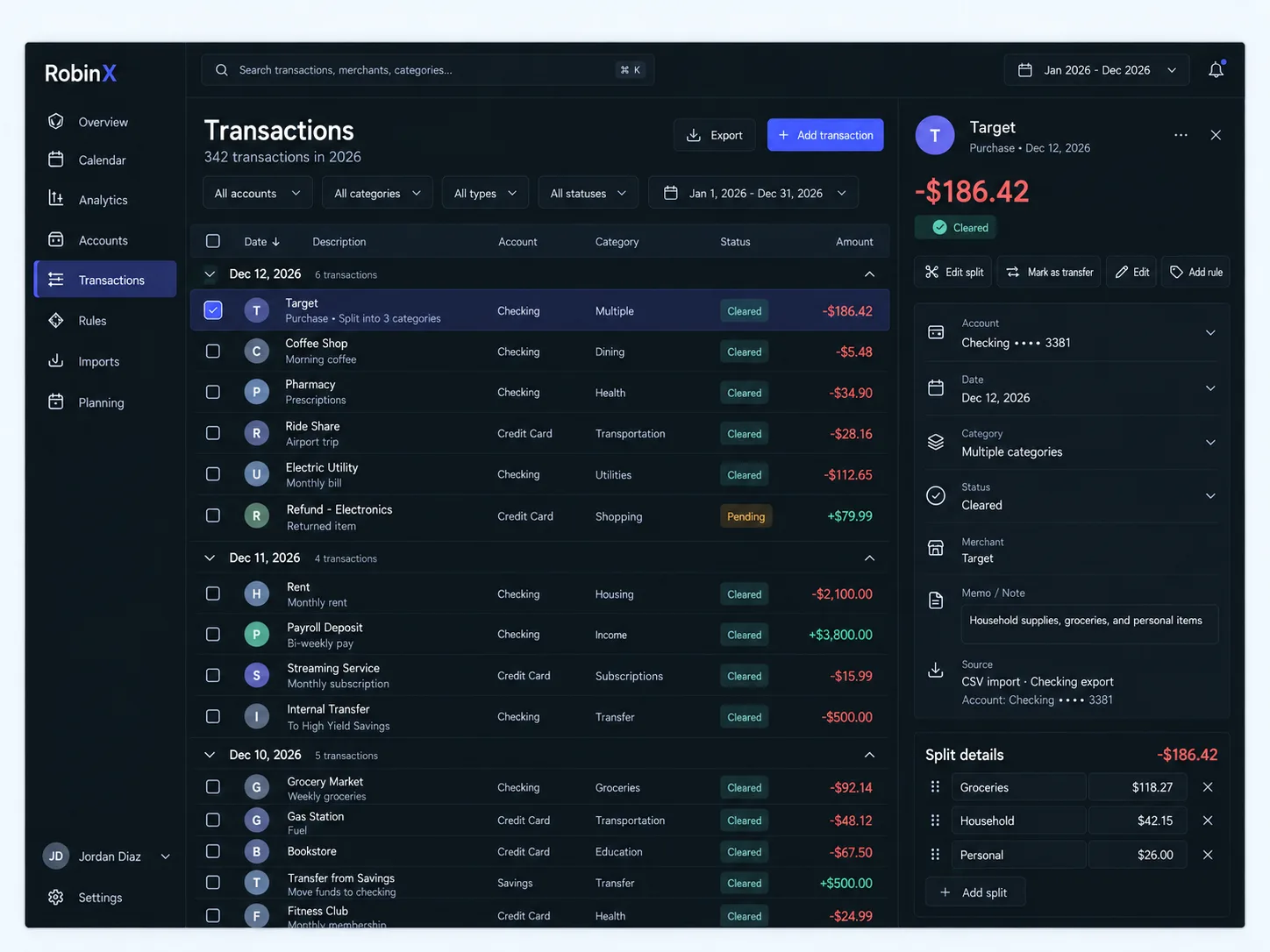
RobinX starts with the financial record people deal with every day. Connected accounts, imports, and manual entry feed the same account history. Transactions can be reviewed, searched, split, transferred, categorized, and corrected without losing the information they arrived with.
Recurring income and expenses feed monthly planning alongside budgets and savings goals. Net worth, cash flow, spending, and investment views are calculated from the same underlying accounts and transactions, rather than maintained as separate sets of numbers.
03 / System
Importing and reconciling financial data
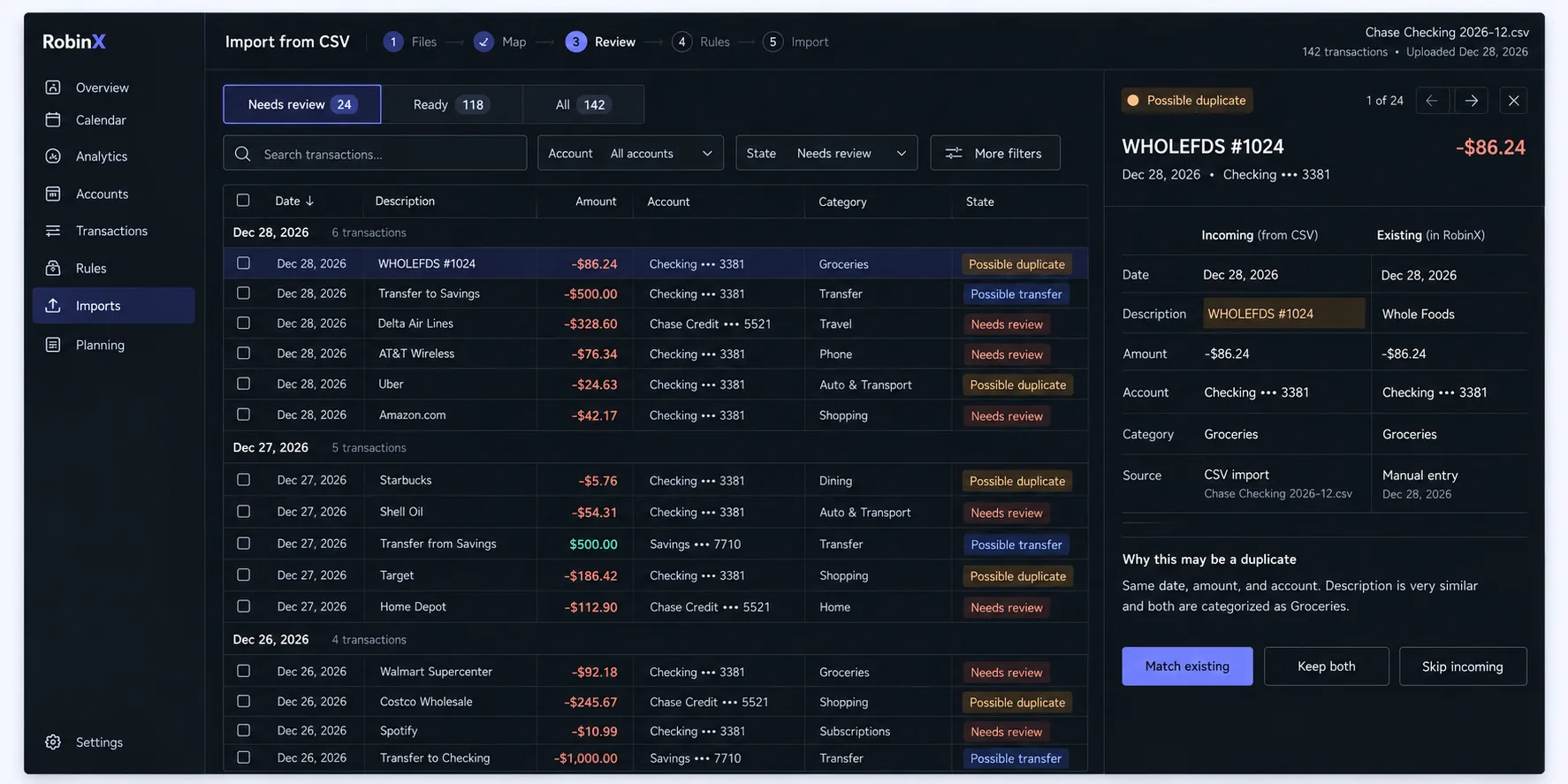
The same activity can reach RobinX in several ways. A pending bank transaction can later arrive as posted, a CSV can overlap with connected history, and the two sides of a transfer can appear from different institutions on different dates. Treating every incoming record as a new transaction would quickly make balances and reports unreliable.
RobinX compares incoming data with the financial history that is already there. Source information is retained, likely duplicates and transfers can be matched, and ambiguous cases are surfaced for review. CSV imports add mapping and validation before anything is committed, with the import remaining identifiable afterward for review or undo.
04 / Detail
Rules and transaction history
Rules handle repetitive work such as normalizing merchants, assigning categories, splitting transactions, and changing other transaction fields. Conditions can be combined, rules run in a defined order, and their effect can be previewed before they are applied to existing activity.
RobinX also keeps a history of those changes. A transaction can show what changed and whether the change came from a person or a rule, which makes automated edits possible to inspect and correct later.
05 / Planning
Long-term planning
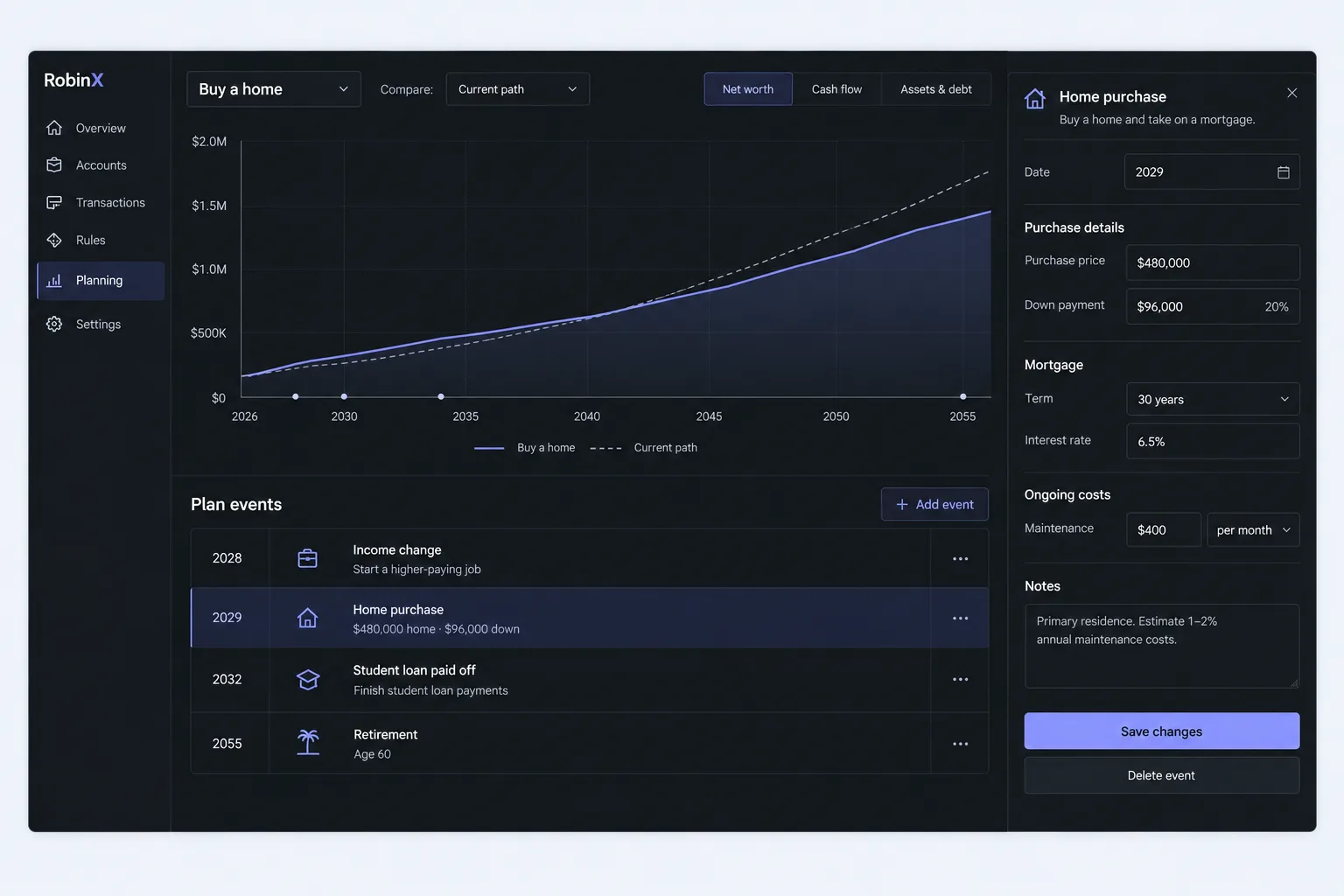
RobinX uses the same financial history for questions beyond the current month. Plans can account for changes in income and spending, housing, investments, major purchases, location, and retirement timing, then show how those choices affect cash flow and net worth over the following years.
Different plans can be compared without rebuilding the user's finances for each one. Progress can then be measured against what happened, rather than leaving the plan as a calculator that was filled out once and forgotten.